
From a New Season in Brazil to the Changing Landscape of Modern Farming
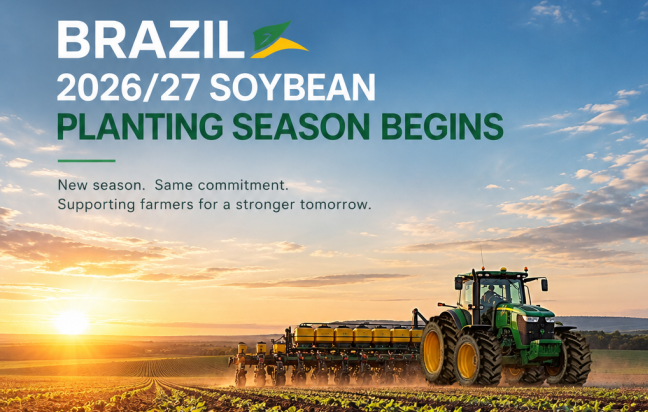
Brazil soybean season is once again bringing global attention to one of the world’s most important agricultural regions. As a new planting cycle begins, Brazil’s agricultural landscape offers a window into the trends shaping modern farming and the future of global agriculture.
Brazil is the world’s leading soybean producer and exporter, and its agricultural cycle has an influence far beyond its own fields. From global food and feed supply to agricultural trade and biofuel production, the country’s soybean sector remains closely connected to markets around the world.
But the beginning of a new season is about more than production forecasts.
It is also an opportunity to look at how agriculture itself is changing.
From larger and more advanced machinery to precision technologies, soil management and improved operational efficiency, the future of agriculture is being shaped by a new generation of challenges and opportunities.
Brazil Soybean Season and the Future of Global Agriculture
Brazil’s soybean industry has experienced decades of remarkable growth.
Over the past fifteen years, the country’s soybean production has followed a strong long-term growth trend, supported by expanding agricultural areas, technological development and increasingly efficient farming systems. Recent forecasts continue to show Brazil as a central force in global soybean supply, even as the pace of expansion becomes more cautious.
For the 2026/27 season, producers are entering a more complex environment.
Higher production costs, tighter credit conditions and pressure on farm margins are encouraging many farmers to focus less on rapid expansion and more on operational efficiency. Weather uncertainty, including the potential effects of El Niño, also adds another layer of complexity to the season ahead.
This shift reflects a broader trend in global agriculture.
The question is no longer simply:
How can agriculture produce more?
Increasingly, the question is:
How can agriculture produce more efficiently, more precisely and with greater resilience?
1. Larger Farms, Bigger Machines, Higher Expectations
Modern agriculture is operating on an increasingly large scale.
In major agricultural regions such as Brazil, farms often rely on high-capacity machinery to complete critical operations within narrow seasonal windows. Planting, spraying and harvesting must be completed efficiently, often across thousands of hectares.
As agricultural operations grow, machinery continues to evolve.
Today’s farms increasingly depend on:
- High-horsepower tractors
- Large-capacity planters
- Self-propelled sprayers
- Combine harvesters
- Grain handling equipment
- Advanced agricultural implements
The scale of modern machinery allows farmers to cover more ground in less time.
But bigger machines also create new challenges.
Weight, soil pressure, fuel efficiency and field mobility all become increasingly important.
This is one reason why agricultural equipment is no longer designed around a single performance factor.
Modern farming requires a balance between:
Power. Efficiency. Precision. And soil protection.
2. Precision Agriculture Is Changing the Way Farmers Work
Agriculture is becoming increasingly data-driven.
Across the world, farmers are adopting technologies that help them make more precise decisions throughout the growing season.
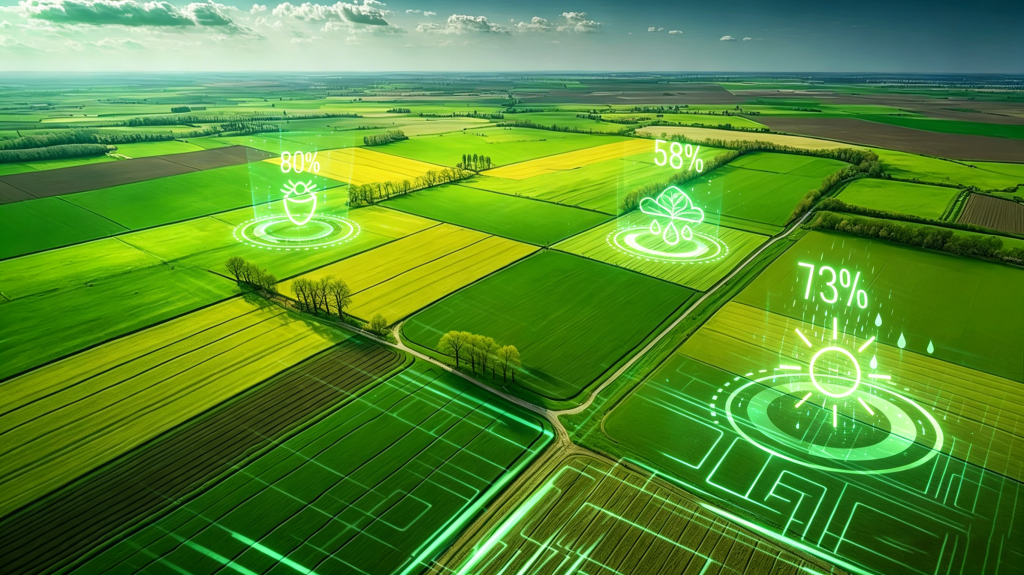
GPS guidance, automated steering, field mapping, sensors and data platforms are changing the way agricultural operations are managed.
Instead of treating an entire field as a single environment, modern farming increasingly recognizes that every field contains differences.
Soil conditions vary.
Moisture levels vary.
Crop performance varies.
And increasingly, agricultural technology is helping farmers respond to those differences.
Precision agriculture can support:
- More accurate planting
- Improved input management
- Better route planning
- Reduced overlap
- More efficient machinery operation
- Improved decision-making
The goal is not simply automation.
The goal is to make every pass across the field more productive.
For large agricultural operations, even small improvements in efficiency can create a significant impact over an entire season.
3. Protecting the Soil Beneath the Machine
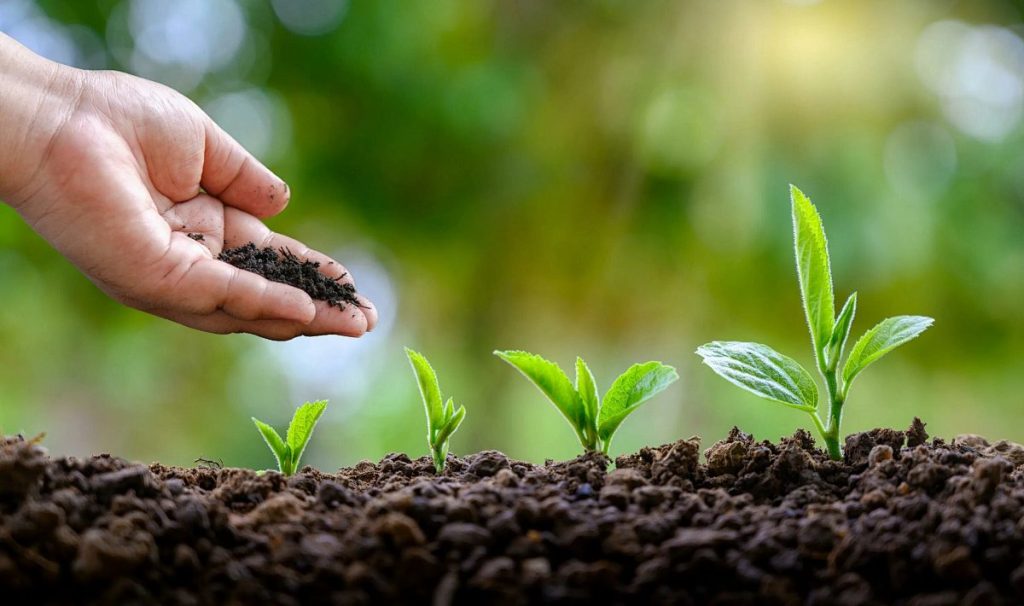
As machinery becomes larger and more powerful, the relationship between agricultural equipment and the soil becomes increasingly important.
Soil is one of agriculture’s most valuable resources.
Healthy soil supports crop growth, water management and long-term agricultural productivity.
However, repeated traffic from heavy machinery can contribute to soil compaction.
This makes ground pressure, tire footprint and load distribution increasingly important considerations in agricultural equipment design and operation.
Modern farming is therefore not only focused on moving machines efficiently.
It is also focused on understanding how those machines interact with the ground.
Technologies and equipment designed to improve flotation and distribute loads more effectively can help support more responsible field operations.
This represents an important shift in modern agriculture.
The ground beneath the machine is no longer simply a surface to travel across.
It is part of the farming system itself.
A New Priority: More Productivity with Less Impact
The future of agriculture will require farmers to meet growing demands while making better use of land, equipment and resources.
This creates a need for agricultural solutions that can help deliver:
More productivity
Completing more work within critical seasonal windows.
Greater efficiency
Reducing unnecessary passes, overlap and operational waste.
Better soil management
Supporting field operations while protecting soil conditions.
Smarter machinery
Using technology and data to improve decision-making.
These priorities are increasingly connected.
Agriculture can no longer look at productivity, machinery and sustainability as separate goals.
They are becoming part of the same system.
4. Efficiency Is Becoming the New Growth Strategy
For many years, agricultural growth was closely associated with expansion.
Beyond production forecasts, the Brazil soybean season also reflects the changing priorities of modern farming.
More land.
More machinery.
More production.
But the next stage of agricultural development may look different.
In Brazil and other major agricultural markets, farmers are increasingly operating in an environment shaped by tighter margins, higher costs and greater market uncertainty. This makes operational efficiency more important than ever.
The future of agriculture may therefore depend less on simply doing more and more on doing better.
This means:
Using machinery more efficiently.
Using resources more precisely.
Protecting the productivity of the land.
Making better decisions with better information.
The future of farming is not defined by a single technology.
It will be built through thousands of improvements across the agricultural system.
5. The Future of Agriculture Starts in the Field
Brazil soybean season is a reminder that agriculture remains deeply connected to the natural world.
Weather still matters.
Soil still matters.
Timing still matters.
And farmers continue to make decisions based on changing conditions in the field.
At the same time, agriculture is becoming more advanced.
Machines are becoming smarter.
Data is becoming more accessible.
Technology is becoming more integrated into daily farming operations.
The future of agriculture will not replace the fundamentals of farming.
Instead, it will build on them.
The most successful agricultural systems of the future may be those that combine:
Experience with technology.
Productivity with responsibility.
Machinery with soil awareness.
Global innovation with local knowledge.
Looking Ahead
Each Brazil soybean season is more than an agricultural cycle—it is also a reflection of the future direction of global agriculture.
As Brazil enters another soybean season, the agricultural industry is once again watching closely.
Production, weather and market conditions will all shape the months ahead.
But beyond the numbers, the season represents something larger.
It represents the continued evolution of agriculture.
From the soil beneath the machine to the technology guiding its path, every part of the agricultural system is connected.
As farming continues to evolve, the focus is becoming clearer:
More productivity.
Greater precision.
Better efficiency.
Stronger resilience.
And above all, a deeper understanding of the land that makes agriculture possible.
At UNIGLORY, we continue to follow agricultural development around the world and the technologies shaping the future of farming.
Because every season begins in the field.
And the future of agriculture begins from the ground up.