
The Silence of the Land Should Be Heard — Rethinking Soil as Agricultural Capital.
Introduction: What Happens to Soil Under Heavy Farm Machinery?
Modern agriculture increasingly faces a hidden challenge: soil compaction caused by agricultural tires and heavy machinery. Soil compaction agricultural tires contribute significantly to this issue.
As farm equipment becomes larger and more powerful, soil compaction agricultural tires interaction has become one of the most important factors affecting soil health, crop yield, and long-term farm productivity.
Awareness of soil compaction agricultural tires is essential for maintaining optimal soil conditions and ensuring sustainable farming practices.
When soil is compressed beyond its structural capacity, it may lead to:
· Reduced water infiltration
·Restricted root growth
·Lower soil aeration
·Increased fuel consumption
·Reduced yield stability
Farmers must consider how soil compaction agricultural tires impact water retention and root growth.
This is why soil compaction is increasingly recognized as a major risk in modern farming.
Mitigating soil compaction agricultural tires effects is crucial for crop success.
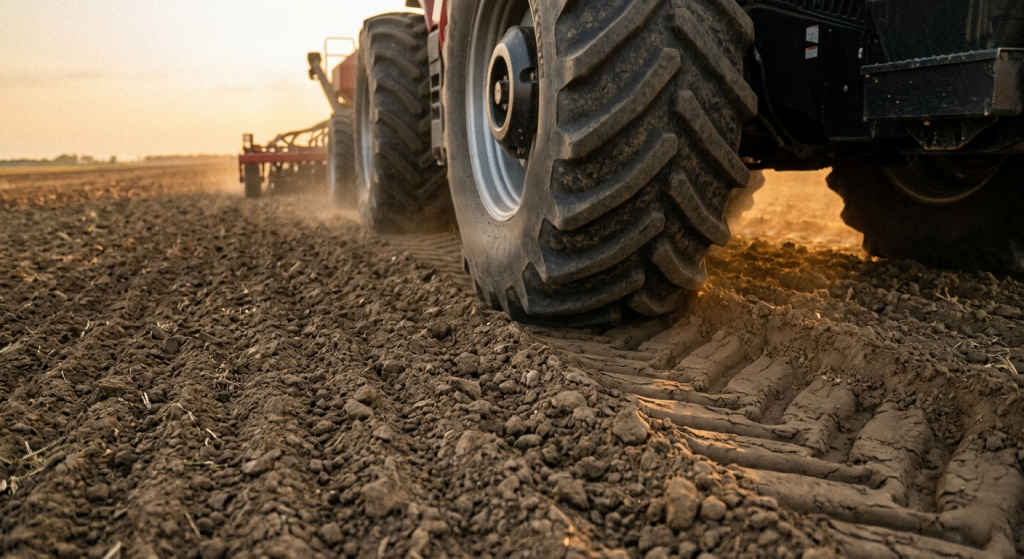
What Is Soil Compaction?
FAO Soil Compaction Overview Soil compaction occurs when soil particles are pressed together under load, reducing pore space and limiting the movement of air, water and roots.
Soil compaction agricultural tires management is a key aspect of modern agriculture.
It is often caused by:
· Heavy agricultural machinery
· High axle loads
· Improper tire pressure
Understanding soil compaction agricultural tires behavior can help optimize farm operations.
The consequences of soil compaction agricultural tires can be long-lasting, affecting yield potential.
· Repeated traffic in the same field zones
Over time, compaction can affect both productivity and long-term soil health.
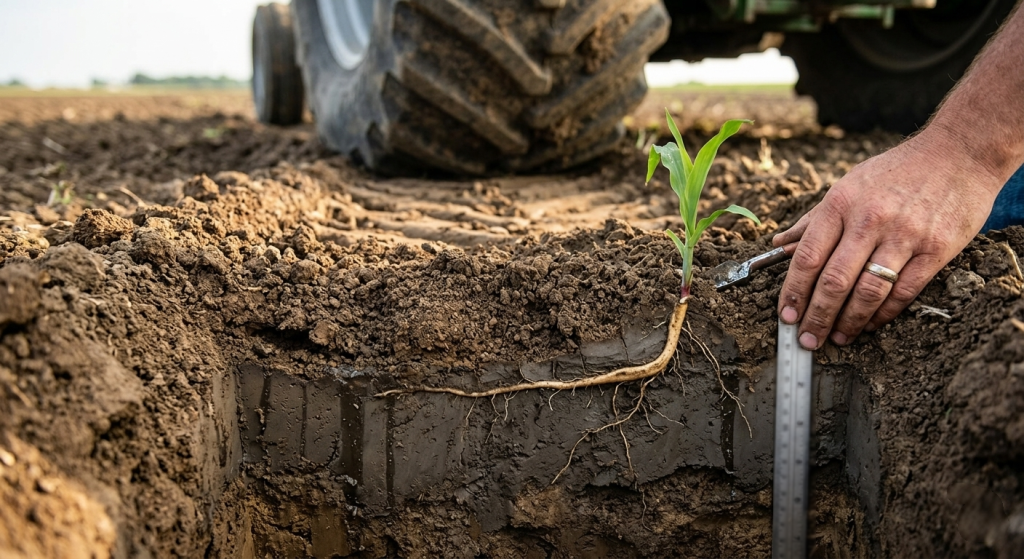
How Soil Compaction Affects Crop Yield
1. Reduced Soil Aeration
Healthy soil depends on pore space for oxygen exchange.
Utilizing proper practices can alleviate soil compaction agricultural tires impacts.
Compaction reduces those pores, which may:
· Limit microbial activity
· Reduce biological soil function
· Lower soil self-recovery capacity
2. Poor Water Movement
Compacted soil can create a dense layer that interferes with water movement.
This may lead to:
· More runoff
· Poor infiltration
· Higher drought sensitivity
In simple terms:
Too much water when wet.
Too little when dry.
3. Restricted Root Development
As soil density increases, roots face greater resistance.
Plants may spend more energy overcoming soil resistance rather than supporting growth and grain filling.
That can reduce yield potential.
The Problem Is Not Only Weight — It Is Ground Pressure
Many assume the issue is simply heavier machinery.
But the real issue is:
How machine load is transferred to the soil.
That is where agricultural tires play a critical role.
How Agricultural Tires Help Reduce Soil Compaction
The relationship is straightforward:
P=F/A
Where:
P = Ground pressure
F = Load
A = Contact area
When contact area increases, pressure per unit area decreases.
This is a key principle in reducing compaction risk.
How IF and VF Tires Reduce Ground Pressure
IF (Improved Flexion) Tires
VF (Very High Flexion) Tires
These technologies help support heavy loads at lower inflation pressures.
Potential benefits include:
· Larger footprint
· Lower ground pressure
· Reduced compaction risk
· Improved traction efficiency
In practical terms:
The same machine can work “lighter” on the soil.
Additional Tire Design Factors That Support Soil Protection
Flexible Tread Design
Proper tread geometry can help:
· Improve traction
· Reduce excessive soil disturbance
· Maintain better soil surface integrity
Low-Pressure Adaptive Performance
In varying field conditions, tire flexibility can support:
· Better flotation in soft soils
· Stable support on firmer ground
Choosing soil compaction agricultural tires wisely can lead to better performance and less soil damage.
· Lower rolling resistance
This may contribute to fuel efficiency as well.
Why Tire Selection Is More Than a Cost Decision
In modern farming, tire choice affects more than purchase price.
It can influence:
· Fuel use
For heavy draft operations, selecting the right soil compaction agricultural tires is essential.
· Secondary tillage costs
· Soil structure preservation
· Yield stability
This is why many growers increasingly view tires as part of soil management, not just replacement components.
Agricultural Tire Solutions for Different Applications
Heavy Draft and High-Load Operations
Recommended options may include:
Suitable for:
· Deep tillage
· Large tractors
· Heavy load field operations
General Field Operations
For:
· Seeding
· Spraying
· Inter-row work
Focus areas:
· Balanced traction
· Soil protection
· Operating efficiency
Harvest and Transport Applications
Focus areas:
· Load stability
· Durability
· Lower ground disturbance risk
Why More Farms Are Reassessing Tire Value
Agricultural tires were once viewed only as consumables.
Increasingly, they are seen as part of:
·Soil health strategy
·Cost management strategy
·Long-term farm productivity planning
That is a significant shift.
Conclusion
Farmers should regularly assess soil compaction agricultural tires to optimize farm operations.
Soil does not speak.
With the right design, soil compaction agricultural tires can improve field efficiency.
But every harvest reflects its condition.
The benefits of soil compaction agricultural tires include reduced compaction and better soil health.
Yield stability, root development and operating costs often reveal how well the soil has been protected.
Ultimately, addressing soil compaction agricultural tires is vital for achieving optimal crop yields.
At UNIGLORY, we believe the future of agriculture is not only about stronger machinery —
it is about sustainable soil management.
And agricultural tires are part of that equation.
FAQ
What causes soil compaction in agriculture?
Heavy machinery, repeated traffic, high loads and improper tire pressure are common causes.
Can agricultural tires reduce soil compaction?
Proper tire design, larger footprints and low-pressure technologies such as IF/VF can help reduce ground pressure and lower compaction risk.
What is the benefit of IF and VF tires?
They may allow higher loads at lower pressure while increasing contact area and reducing soil stress.
How does soil compaction affect crop yield?
It may restrict roots, reduce water movement and affect soil aeration, which can reduce yield stability.